Thymosin beta-4: the biology underneath the brand
Start with the molecule that actually exists in nature. Thymosin beta-4 (Tβ4) is a 43-amino-acid peptide found in almost every mammalian cell, where its day job is binding actin — the protein that gives cells their shape and movement. When tissue is injured, Tβ4 is released by platelets and other cells at the wound site, where it promotes cell migration, new blood vessel formation (angiogenesis), stem and progenitor cell mobilization, and reduced inflammation and scarring.[1]
That repair biology is real and well documented. Tβ4 has been studied in dermal wound healing, corneal injury and cardiac repair, with completed Phase II human trials in corneal wounds and chronic skin ulcers — one trial reported healing accelerated by almost a month in patients who healed.[2] So when someone says "TB-500 is backed by hundreds of studies," this is the literature they are (usually unknowingly) citing.
TB-500 is not Tβ4 — and that gap matters
TB-500 is marketed as a synthetic fragment representing the active region of Tβ4 — typically the actin-binding motif around the LKKTET sequence. The logic is plausible: if the fragment carries the repair activity, a smaller molecule is cheaper and easier to dose. The problem is the evidence trail. A 2026 scoping review of 1,772 records found the repair literature overwhelmingly studied full-length Tβ4, with direct evidence on TB-500 itself limited to a single included study.[3]
In other words: TB-500's reputation is borrowed. The wound-healing, cardiac and corneal data belong to the parent molecule. That does not prove TB-500 is inert — fragments can carry activity — but it means "clinically studied" claims for TB-500 are, at best, citations of a different compound.
What this means for your dog
TB-500 is the compound where marketing runs furthest ahead of the data: zero published canine efficacy trials, with most of the "evidence" belonging to a different molecule (full-length Tβ4) in different species. If your dog is recovering from injury, the proven levers are diagnosis, rest, rehab and weight control. Anything else belongs in a conversation with your vet — eyes open, expectations low, one variable at a time.
Why horse racing banned it — and why that matters
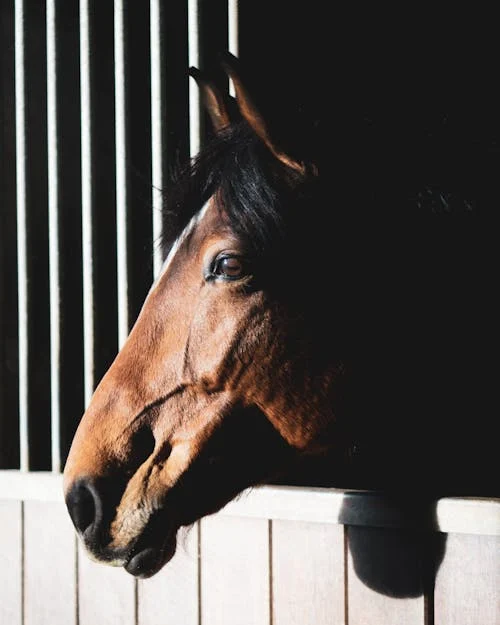
TB-500's most concrete real-world footprint is not in medicine but in anti-doping. Racing regulators classify thymosin beta-4 among prohibited blood-doping and peptide agents: the Pennsylvania racing rules, for example, expressly forbid "Thymosin beta" on racetrack premises alongside EPO and AICAR,[4] and the World Anti-Doping Agency prohibits Tβ4 and its fragments at all times under category S2 (peptide hormones, growth factors and mimetics).[5] Detection methods for TB-500 in equine plasma exist precisely because misuse in racehorses required routine testing.
Read that signal carefully. A ban is not proof of efficacy — regulators prohibit on plausible mechanism, not on randomized trials, and WADA listings presume benefit rather than demonstrate it.[5] But the racing context tells you two true things: the peptide is bioactive enough to worry professional regulators, and its modern use culture was built in a grey-market, performance-first environment — not in veterinary clinics with follow-up bloodwork.
The pet evidence gap, stated plainly
For dogs and cats specifically, here is the entire efficacy record: there are no published, controlled clinical trials of TB-500 — or of systemic Tβ4 — for any canine or feline condition. Not for tendon injuries, not for post-surgical recovery, not for "overall wellness." The closest adjacent evidence is the general Tβ4 repair literature in rodents and human topical trials,[1][2] plus equine anecdote that anti-doping labs treat as a problem to detect, not a therapy to study.[4]
This is why Peptides4Pets labels the BPC-157 + TB-500 pairing in our Recovery Blend as community practice, not proven therapy. The BPC-157 half has canine pharmacokinetic data; the TB-500 half has none. We say so on the label, and we are saying it again here.
What responsible use looks like
If you and your vet nonetheless decide to explore TB-500, the responsible version looks like this: a diagnosed problem (not a vague hope), a product with a batch-level certificate of analysis (grey-market TB-500 purity is a genuine hazard), a written log of mobility and behaviour, and a scheduled re-check. Never in competition animals — equine sport bodies treat it as doping,[4] and canine sport regulation is moving the same way.
And never as a substitute for the unglamorous proven tools: rest, structured rehabilitation, weight control, and — when indicated — registered medicines with actual canine trial data behind them.
What this means for South African pet owners
TB-500 circulates in SA through gym suppliers and grey-market peptide sellers, usually with no COA and no dosing discipline. If your working dog, agility dog or post-surgery patient is being considered for a "Wolverine stack," the South African reality check is this: proven rehab (physio, hydrotherapy, controlled rest) is available locally and works; TB-500 remains an unproven add-on anywhere in the world.
Our position at Peptides4Pets is unchanged: we will sell you the molecule with a certificate of analysis and the evidence ledger attached — and the ledger currently reads "preclinical." Founding members get the honest version first.
Honest answers.
Is TB-500 the same as thymosin beta-4?
No. Tβ4 is the natural 43-amino-acid repair peptide with the published wound, corneal and cardiac literature. TB-500 is a synthetic fragment marketed as its active region. A 2026 scoping review found the repair evidence base belongs almost entirely to full-length Tβ4 — direct TB-500 studies are essentially absent.
Has TB-500 been tested in dogs?
There are no published controlled trials of TB-500 for any canine condition. Everything claimed for dogs is extrapolated from rodent Tβ4 studies, human topical Tβ4 trials, and equine anecdote. That is why we grade it preclinical and why veterinary supervision is non-negotiable.
Why is TB-500 banned in horse racing?
Racing authorities classify thymosin beta-4 as a prohibited peptide/blood-doping agent because its tissue-repair mechanism is presumed to confer a performance advantage. WADA also prohibits Tβ4 and its fragments under S2. A ban signals bioactivity and enforcement priority — it is not proof of efficacy.
Is the BPC-157 + TB-500 "Wolverine stack" proven for pets?
No. The pairing is community practice popularized by US pet brands. BPC-157 has canine pharmacokinetic data (45–51% IM bioavailability in beagles, well tolerated); TB-500 has no canine data at all. If used, it should be a vet-supervised experiment with honest expectations.
What are safer, proven options for my injured dog?
Diagnosis first, then the proven stack: rest and controlled rehab, weight management, registered pain relief when indicated, and joint-support nutrition with actual canine RCTs (bioactive collagen peptides being the strongest). Supplements with thinner evidence belong behind those, never in front.
References
-
[1]
Goldstein AL, Hannappel E, Sosne G, Kleinman HK. “Thymosin β4: a multi-functional regenerative peptide. Basic properties and clinical applications.” Expert Opinion on Biological Therapy, 2012.
https://pubmed.ncbi.nlm.nih.gov/22074294/ -
[2]
Xing Y, Ye Y, Zuo H, Li Y. “Progress on the Function and Application of Thymosin β4.” Frontiers in Endocrinology, 2021.
https://pmc.ncbi.nlm.nih.gov/articles/PMC8724243/ -
[3]
McGuire F, Hughes E, Maak T, Cushman DM. “Thymosin Beta-4 and TB-500 in Tissue Healing, Regeneration, and Musculoskeletal Repair: A Scoping Review.” Applied Sciences, 2026.
https://www.mdpi.com/2076-3417/16/12/6202 -
[4]
Pennsylvania State Horse Racing Commission. “Blood doping substances or agents prohibited (49 Pa.B., §403.6).” Pennsylvania Bulletin, 2019.
https://www.pacodeandbulletin.gov/secure/pabulletin/data/vol49/49-42/49-42.pdf -
[5]
World Anti-Doping Agency. “The Prohibited List — S2: Peptide Hormones, Growth Factors, Related Substances and Mimetics.” WADA International Standard, 2026.
https://www.wada-ama.org/en/resources/world-anti-doping-code-and-international-standards/prohibited-list